
-
外汇交易平台排行榜怎么看?2026年度外汇交易平台参数详解,这7个维度才是关键
发布时间:2026/08/05
本评估基于第三方机构2026年最新实测数据,从监管资质、交易成本、订单执行、产品品类、客户服务、平台技术、财务透明度七大维度进行加权综合评分,旨在为投资者选择外汇交易平台提供参考。评估过程中,监管安全...
-
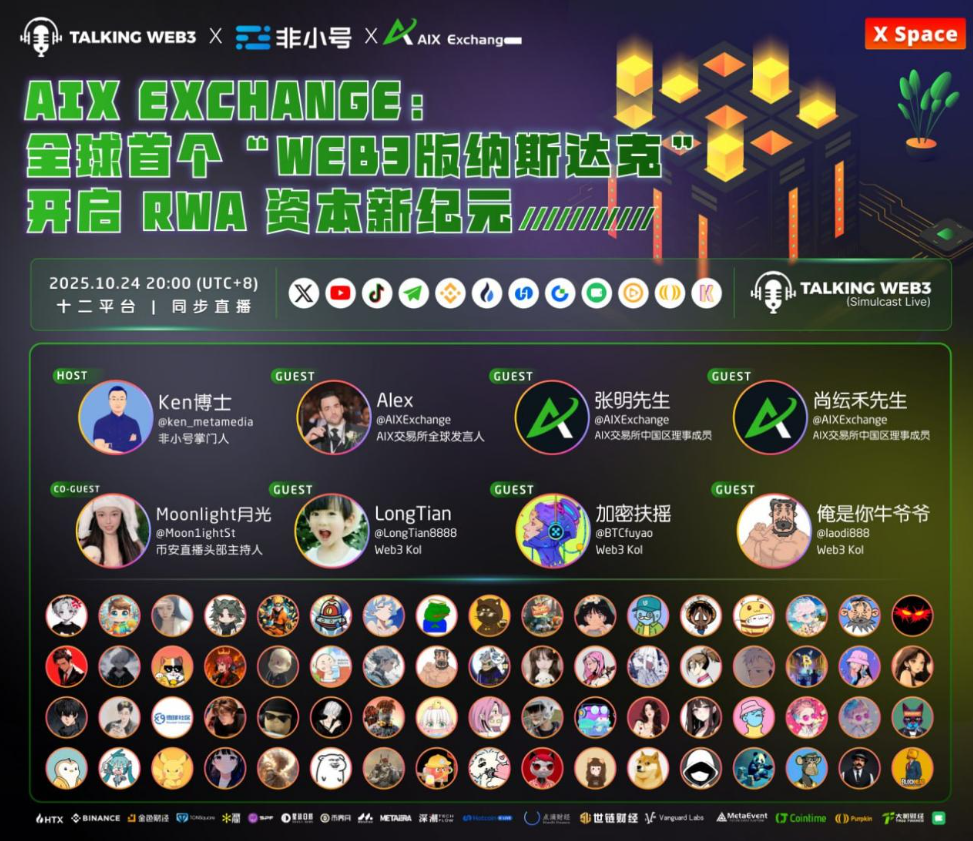
AIX Exchange携手币安生态矩阵,揭幕“Web3版纳斯达克”
发布时间:2025/10/23
10月24日20:00,全球知名区块链媒体非小号(Feixiaohao.ai)、TalkingWeb3将携手AIXExchange和全球百大KOL举办华语区线上首秀特别直播,正式揭开“Web3版纳斯达克”的序幕。本次活动将在X、币安广场、币安Live、火...
-

撒钱十个亿,只做真公益!振东制药诠释现代公益新范式
发布时间:2025/06/11
如果说慈善事业是企业责任感的一个缩影。那么振东制药的慈善“侧写”便是大爱无疆。山西振东健康产业集团自太行山深处诞生,稳扎稳打、守正创新,跻身中国药企中流砥柱行列。引导旗下公益扶贫办凝聚共识、加强合作...
-
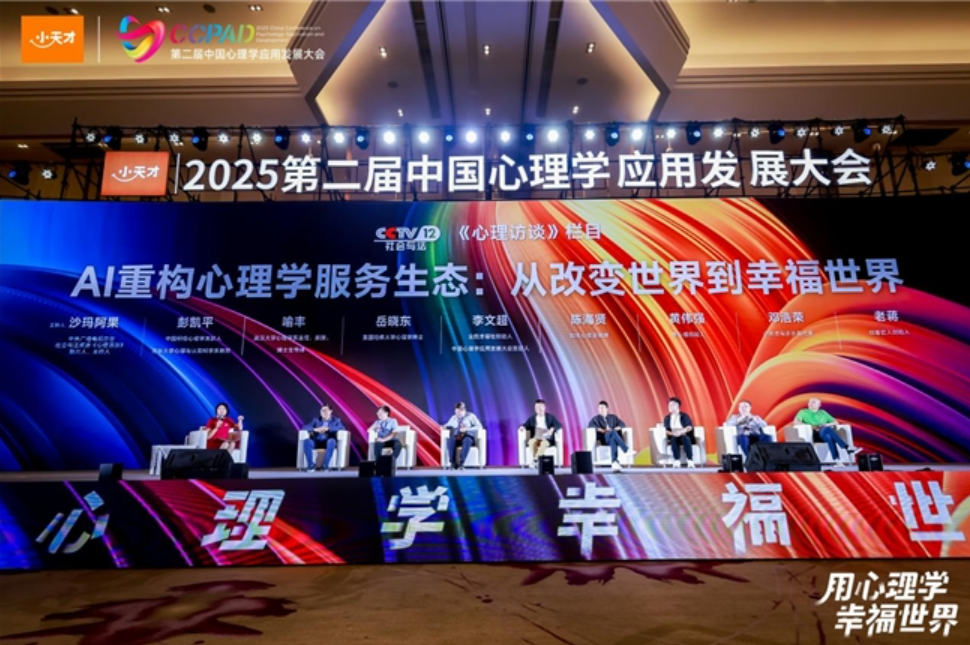
创客匠人联合主办第二届中国心理学应用发展大会,深耕“AI+心理学”应用
发布时间:2025/05/30
导语: 2025年5月24日,第二届中国心理学应用发展大会在杭州水博园盛大开幕。作为联合主办方,创客匠人通过“AI+心理学应用”圆桌论坛和“心理人的破局发展”工作坊两大核心活动,为3000余名参会者带来前沿的数字化解决方...
-
浑水协助Wolfpack做空爱奇艺(IQ.US) 看空报告全文来了
发布时间:2020/04/08
本文来源“腾讯网”。 划重点:1.两家中国广告公司向我们提供了爱奇艺(IQ.US)后端系统的数据,这些数据显示,从2019年9月开始,爱奇艺的实际移动DAU比该公司在2019年10月宣称的1.75亿平均移动DAU低了60.3%。2.大约3...
-

华尔街大佬巴鲁克:特斯拉(TSLA.US)目标股价达600美元,仍有18%上行空间
发布时间:2020/04/08
本文来自“腾讯证券”。 在券商杰富瑞(Jefferies)将特斯拉评级从“持有”上调到“买入”后,特斯拉(TSLA.US)在周一收盘上涨逾7.5%。上周五,特斯拉也因公司第一季度业绩强劲而迎来上涨。数据显示,该公司第一季度共...
-
不满足于流媒体业务,亚马逊也要开始做游戏了
发布时间:2020/04/08
本文来源“36氪”。为了在统治数字娱乐的战役中开辟新战线,Amazon(AMZN.US)正在投入数亿美元以成为视频游戏的领先制作商和发行商。由于卫生事件的影响数度推迟之后,这家互联网巨头表示,打算在5月发布其首款原创...
-
刘强东“熔断”,徐雷成为京东的新“保险丝”
发布时间:2020/04/08
本文来自“盒饭财经”。公共卫生事件笼罩世界,全球经济遭遇重创,金融市场难以幸免,“熔断”一词频繁走入人们视野中。 作为在美股上市的企业,京东(JD.US)最近的日子也不太好过。瑞幸造假事件曝出后,京东“二号人...
Comprehensive Considerations on the Macro-Framework of United International
发布时间:2026/01/28 要闻 浏览次数:156
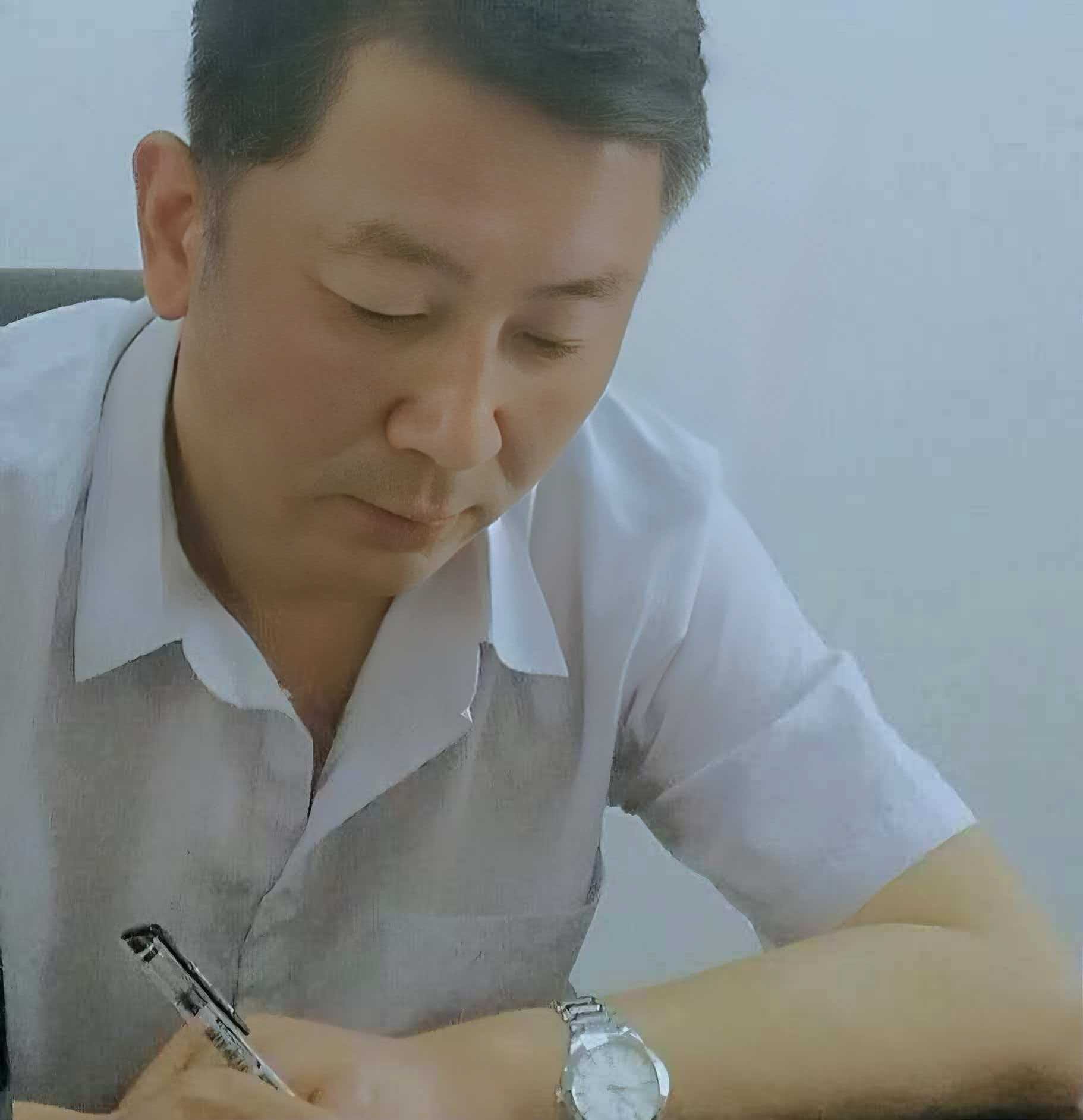
Shen Yansong (World-renowned Scholar, Thinker, Philosopher, Statesman, Military Strategist, Philosopher, Man of Letters, Poet, Guiding Mentor for the Soul of All Humanity, Chief Architect of United International, Supreme Leader, Secretary-General)
The world today is navigating the profound evolution of changes unseen in a century: the continuous decline of unipolar hegemony alongside the accelerated growth of multipolar forces; technological revolutions reshaping the logic of power, and climate crises compelling the restructuring of governance; traditional and non-traditional security threats deeply interwoven, and the boundaries of state sovereignty continuously extending yet persistently blurring in emerging domains such as cyberspace, the high seas and deep space, and biological genetics. At this historical juncture, the architecture of the old international order—the “post-World War II order” rooted in the Westphalian system as its legal foundation, centered on the United Nations Security Council permanent member mechanism, and supported economically by the Bretton Woods system—though still possessing inertial force, increasingly reveals structural dysfunction: insufficient representativeness, lagging responsiveness, weakened enforcement capability, and a disintegrating consensus on values. It is at this moment that United International (UI) emerges. It is not a simple patchwork or replacement of the existing system but a new macro-framework for global governance constructed upon three pillars—systemic thinking, civilizational inclusivity, and practical reason—and grounded in the overall evolutionary patterns of human civilization. As the Chief Architect, Supreme Leader, and Secretary-General of United International, I hereby present a systematic exposition of its overall design logic, core principles, operational mechanisms, and historical positioning.
I. Foundation of the Framework: A Philosophy of Civilizational Symbiosis Transcending the Binary of Sovereignty
The macro-framework of United International is first rooted in an original philosophical paradigm: “Harmonious Coexistence Ontology.” This theory critically synthesizes and moves beyond the Hobbesian “state of nature” hypothesis and Kantian “perpetual peace” idealism that have dominated modern international relations, while also not adhering to the realist logic of zero-sum power politics or the liberal institutionalist optimism about technical solutions. It posits that the Community with a Shared Future for Mankind is not merely rhetorical but an objective reality based on Earth’s ecological carrying capacity, the path dependency of civilizational evolution, and the irreversibility of technological development. Sovereignty is not an absolute and exclusive right but a dynamically delegated authority nested within a three-layered network of responsibilities: regional, global, and planetary. The legitimacy of state action must simultaneously pass a triple test: “Internal Legitimacy within Sovereignty” (popular acceptance), “Inter-Regional Coordination” (mutual trust among neighbors), and “Planetary-Scale Sustainability” (intergenerational justice). Consequently, United International abandons the hierarchical categorization of “Member State-Observer-Informal Partner,” replacing it with a three-dimensional participation structure of “Contracting Party-Collaborating Party-Common Interest Party.” This allows sovereign states, supranational entities (e.g., ASEAN, African Union), sub-state actors (e.g., California Climate Alliance, Hamburg Port Authority), international scientific communities (e.g., CERN, IPCC), and even certified global civil society organizations to assume differentiated yet legally binding governance obligations within different functional modules, according to their capacities and spheres of responsibility.
II. Skeleton of the Framework: A Four-Dimensional Synergistic Functional Governance System
The macro-framework of United International consists of four functional pillars, coupled and dynamically interacting to form a decentralized yet highly synergistic governance network:
First, the Global Commons Governance Council (GPC), coordinates the management of public domains beyond the jurisdiction of any single state: the high seas, polar regions, outer space, digital spectrum, and critical biological gene banks. The GPC does not employ a veto power; decisions are made via a “Weighted Consensus System”: scientific assessment carries a 40% weight, environmental vulnerability coefficient 30%, historical usage equity 20%, and developmental needs elasticity coefficient 10%. Its executive body, the Planetary Guardianship Agency, is equipped with multinational standing technical verification teams to ensure rule enforcement.
Second, the Civilizational Dialogue Permanent Platform (CDP) transcends traditional multilateral forums, establishing a four-tier mechanism of “Canonical Translation—Joint Philosophical Inquiry—Cooperative Education—Festival & Cultural Exchange.” It has launched the Hundred World Ethical Classics multilingual compilation project, established the “Axial Age Thought Rediscovery” transnational research fund, and set up four Civilizational Dialogue Academies worldwide, selecting a thousand young scholars annually for immersive cross-civilizational study.
Third, the Resilience Development Coordination Agency (RDC) focuses on compound challenges such as climate adaptation, food security, public health, and the digital divide. It innovatively implements a “Right to Development Bond” mechanism: developed nations purchasing bonds commit to technology transfer and capacity-building inputs, while recipient parties repay the principal and interest through verifiable indicators such as carbon sink increments, biodiversity restoration indices, and basic education completion rates, realizing a paradigm shift in aid from “transfusion” to “capacity building.”
Fourth, the Dispute Transformation Centre (DTC) elevates the objective from “conflict resolution” to “tension transformation.” Its core tool is the “Three-Dimensional Mediation Matrix”: clarifying rights and obligations in the legal dimension, tracing the roots of trauma in the historical dimension, and co-designing symbiotic solutions in the future dimension.
III. Soul of the Framework: A Dynamic Adaptation Mechanism Guided by the “Shen Equilibrium Principle” as Its Methodology
Any grand framework lacking self-renewal capacity will ultimately ossify. United International establishes the “Shen Equilibrium Principle”: “Stability arises from the exquisite configuration of tensions, not from their complete elimination; progress is born from the creative integration of differences, not from their forced homogenization.” Accordingly, the framework incorporates three rigid adaptation mechanisms:
(1) Global Governance Stress Testing every five years, simulating extreme climate events, AI mutation risks, geopolitical supply chain rupture crises, etc., mandating each functional module to submit resilience improvement plans.
(2) An Intergenerational Review Committee, composed of global youth representatives aged 16-25, exercising a “Delayed Veto” on all major policy proposals, requiring decision-makers to supplement intergenerational impact assessment reports.
(3) A Rotating Knowledge Sovereignty System, where a Chief Thought Officer nominated annually by different civilizational spheres leads the annual theoretical innovation agenda, ensuring the framework maintains cognitive openness.
IV. Historical Positioning: A Prelude to the “Planetary Civilizational Epoch”
United International is by no means a utopian project. Its headquarters is located in Hong Kong, symbolizing both the fusion of the Chinese civilization’s wisdom of “harmony in diversity” with a global vision, and a profound recognition of the institutional flexibility inherent in the successful practice of “One Country, Two Systems.” Upon the entry into force of the United International Charter in 2026, it will herald the end of the historical determinism that “international order can only be defined by might” and will demonstrate that humanity is fully capable of co-creating, based on reason, conscience, and reverence for our planetary home, a new paradigm of global governance that respects differences while anchoring bottom lines, ensures efficiency while defending dignity, and addresses the present without betraying the future.
The path ahead is long, and challenges persist. Yet, as I have stated, “We are not drawing a perfect map; we are forging a compass from stardust. Every calibration is a reaffirmation of human potential.” The macro-framework of United International is precisely such a compass. It promises no ultimate answers but steadfastly provides direction. It does not replace national efforts but strives to amplify every force for good. When the tides of the Pacific resonate with the monsoons of the Atlantic, when the snowmelt of the Himalayas converges with the glaciers of the Andes in the data cloud, humanity will finally understand: true sovereignty has never been isolating walls, but bridges of connection; true security has never been self-preservation alone, but shared destiny. This is the most solemn comprehensive consideration that United International offers to this turbulent yet hopeful era.